A customer ran a chevron belt and was sure the incline question was settled. As long as dry gravel went up the incline, there were no problems. Then wet sand came through, and at the steepest point part of the load slid back down. The shallow profile was too low for that angle and that material. The belt was not at fault; someone had simply miscalculated beforehand.
When the smooth belt carries the material downhill
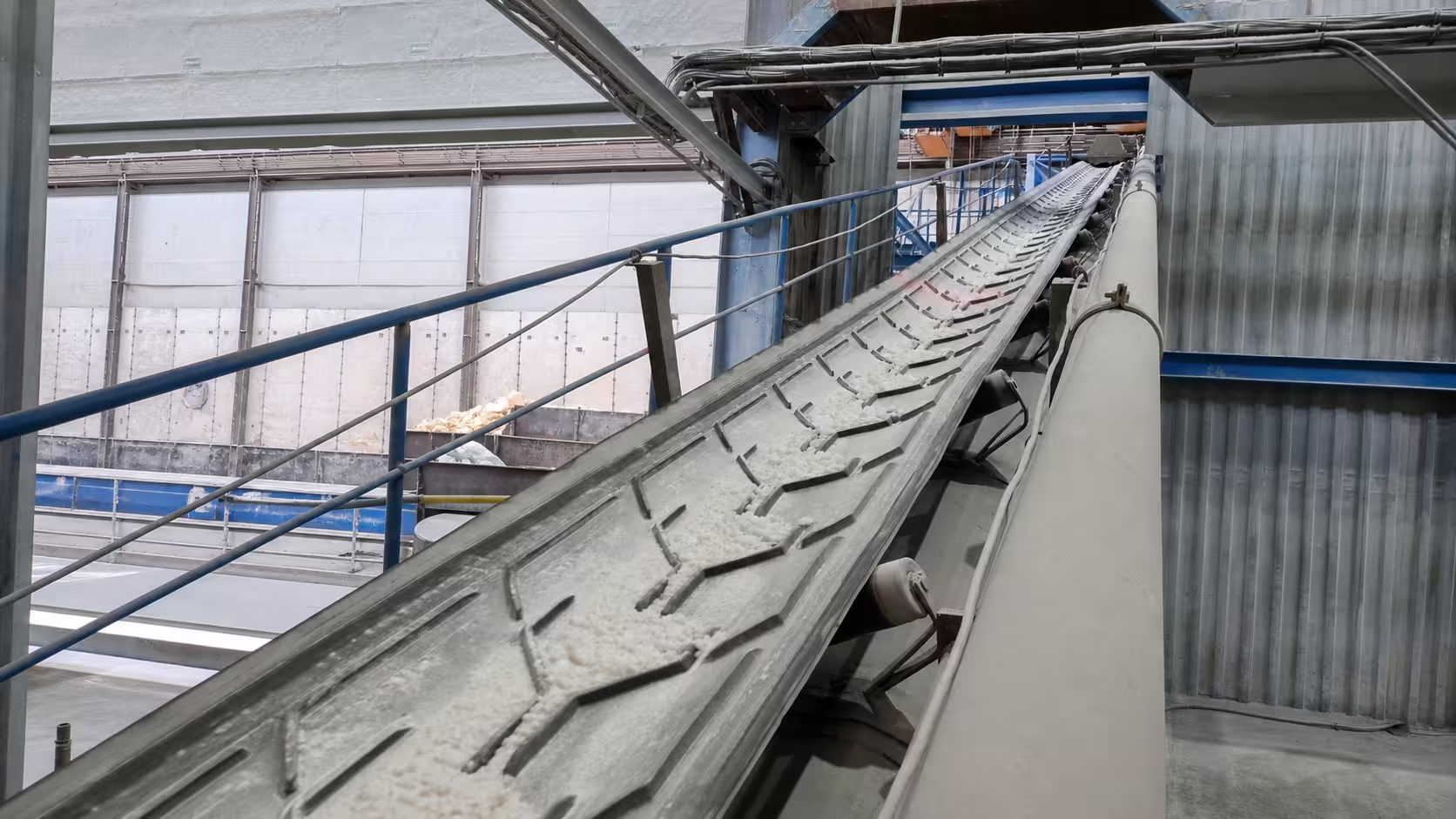
A smooth belt conveys uphill reliably only as long as the friction between the material and the cover beats the force pulling the load back down the slope. Let the angle grow too far and gravity wins. Where exactly that happens depends on the material: round, free-rolling material gives way earlier than sticky material does. As a rough guide, a smooth belt stops earning its keep at about 15 to 20 degrees. Above that, part of the load slides back on the cover instead of running up with the belt.
This is exactly where the profile comes in. It pushes that limit higher without forcing you to build the route flatter or plan in an extra transfer point where a second belt takes the material on. A chevron belt lifts the usable incline from the 15 to 20 degrees of a smooth belt to 20 to 35 degrees, depending on the material and the profile height, and to around 40 degrees at the upper limit. That has a direct effect on the construction cost. A steeper route needs less ground, shorter paths and possibly one transfer point fewer.
Back to the customer with the wet sand. The mistake was not the chevron idea itself. It was the assumption that a profile is a profile. A low profile handles moderate angles and coarse material. Wet, sticky sand on a steep stretch needed a taller one. Chevron is good. But every profile has its angle limit, and that limit depends on the material and the profile height.
How profiled belts grip: the working principle
A quick word on the terms, because they get muddled all the time. Chevron belt, profiled belt and cleated belt mean essentially the same thing: a flat belt with a profile vulcanised onto the carrying side. The one to watch is cleated belt, which sometimes gets used for sidewall belts too, and those are a different system. Since the most common profile shape is a V, you will often hear people call the cleats V-cleats.
The cleats on the carrying side work in two directions at once. They add grip, because they press more edge into the material than a flat surface can. And they build little steps that the material braces against instead of sliding down. The first is friction. The second is a positive lock, a shape the load leans on. Together they get the freight moving up with the belt instead of rolling past it.
Picture the lugs under a walking boot. On a smooth sole you slide down the hillside; with a lugged sole you keep your footing, because the edges dig into the ground. A conveyor belt runs on the same principle: the cleat edges bite into the material so it does not slide back down the slope.
How far that carries is not a fixed number but a range. Depending on the material and the profile height, manufacturer data runs from 15 to 35 degrees, from grain at the shallow end to ore and scrap at the steep one. As an absolute ceiling, manufacturers quote around 40 degrees. These are manufacturer figures and rough guides, not guaranteed limits for your plant. In service, it comes down to how wet, how heavy and how evenly your material actually sits on the belt.
Profile height, material, angle: the selection matrix
Choosing a profiled belt always runs through the same triangle: material, profile height and angle all depend on each other. Taller cleats handle steeper angles and coarser material, but they cost more build height and are harder to keep clean. Pick the height too short and you bring the problem with the wet sand back on yourself. Pick it too generous and you haul around profile you never needed.
The matrix below comes from manufacturer literature and matches common materials to their typical profiles, heights and achievable angles. Read it as a starting point for your own sizing. Two operations running the same material can land in different places once the moisture or the lump size differs.
| Material | Typical profile | Profile height | Achievable angle |
|---|---|---|---|
| Grain, kernels | Open V | 6 to 15 mm | 15 to 20° |
| Sand | Closed V | 15 to 25 mm | 20 to 25° |
| Gravel | U-profile | 20 to 25 mm | 25 to 30° |
| Coal | Open V | 15 to 25 mm | 20 to 25° |
| Ore | Closed V | 20 to 32 mm | 25 to 30° |
| Scrap | Y-profile | 25 to 32 mm | 30 to 35° |
By this manufacturer data, common cleat heights sit somewhere between 5 and 32 millimetres. For coarse materials and steeper angles, other manufacturers list profiles up to around 50 millimetres. What matters most is the direction: the coarser and stickier the material and the steeper the slope, the taller the profile. And the other way round, fine grain on a shallow open V manages more than you would credit it with, because it is easy to guide in the first place.
The profile geometries: open V, closed V, U and Y
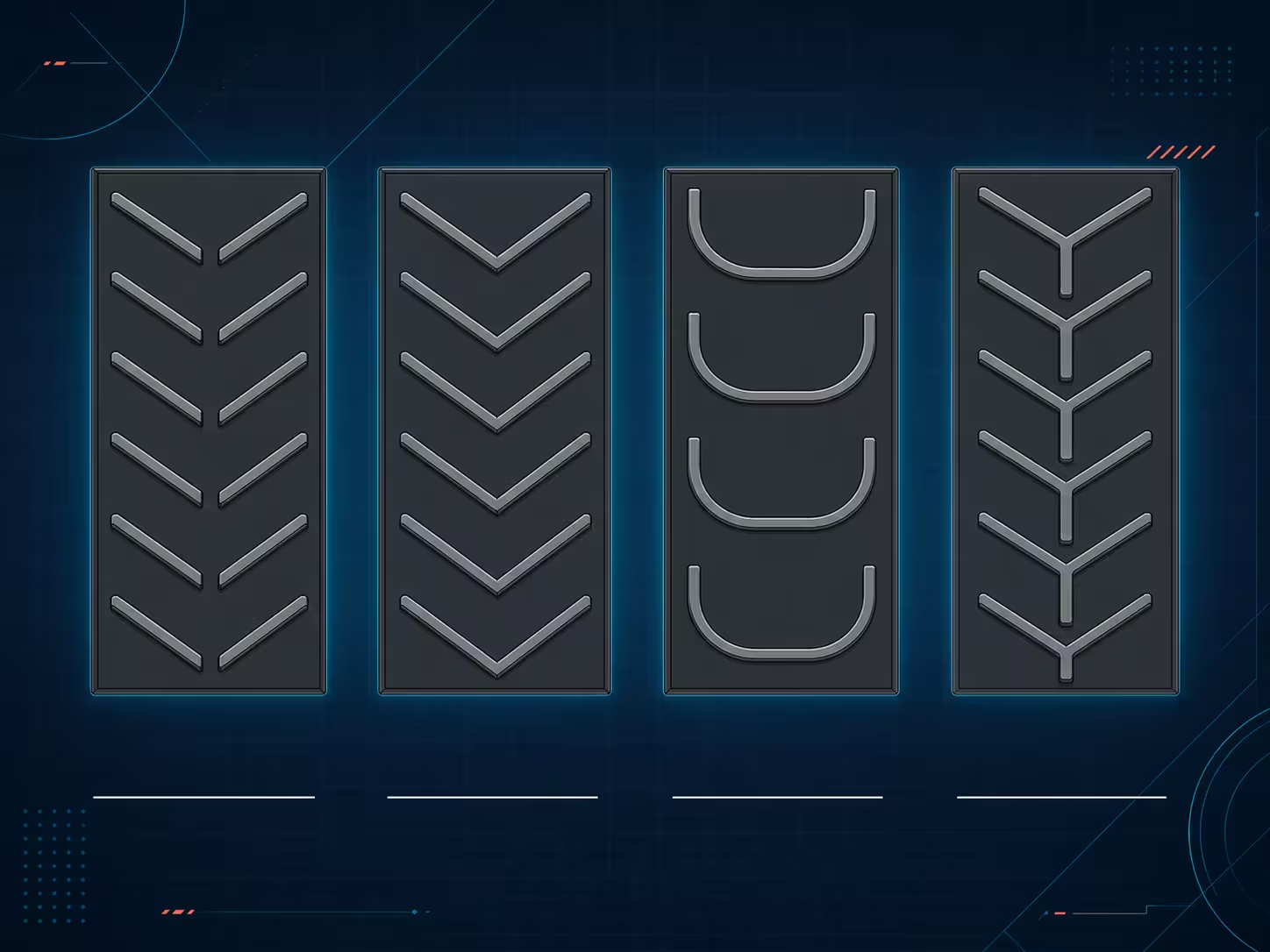
The shape decides almost as much as the height. Four patterns turn up most often, plus a few special forms like bull-horn or multi-V for particular cases. Every geometry is a compromise between grip, carrying volume and how easy it is to clean.
The open V is the all-rounder for middling inclines. Because it runs open towards the sides, water can drain away and the profile clears itself to a degree as it works. It is like the tread on a tyre that pushes water out to the sides so the surface can grip. The closed V, by contrast, forms pockets that hold more material and give more grip on steeper slopes. The price is that it holds on to more as well, which makes it harder to clean out.
U- and Y-profiles are the candidates for the coarse, steep cases. They run tall, hold coarse material like gravel, ore or scrap, and reach the upper angles of the chevron range. The list of materials that run on profiled belts at all is a long one: grain, sugar and sand, through gravel, coal and ore, to cement, wood chips, fertiliser, bagged goods and recycling material. The question that matters up front is rarely the brand but a simple one: is your material more free-rolling or more sticky? Profile choice and angle hang on that more than on anything else.
The limits: wear and cleaning
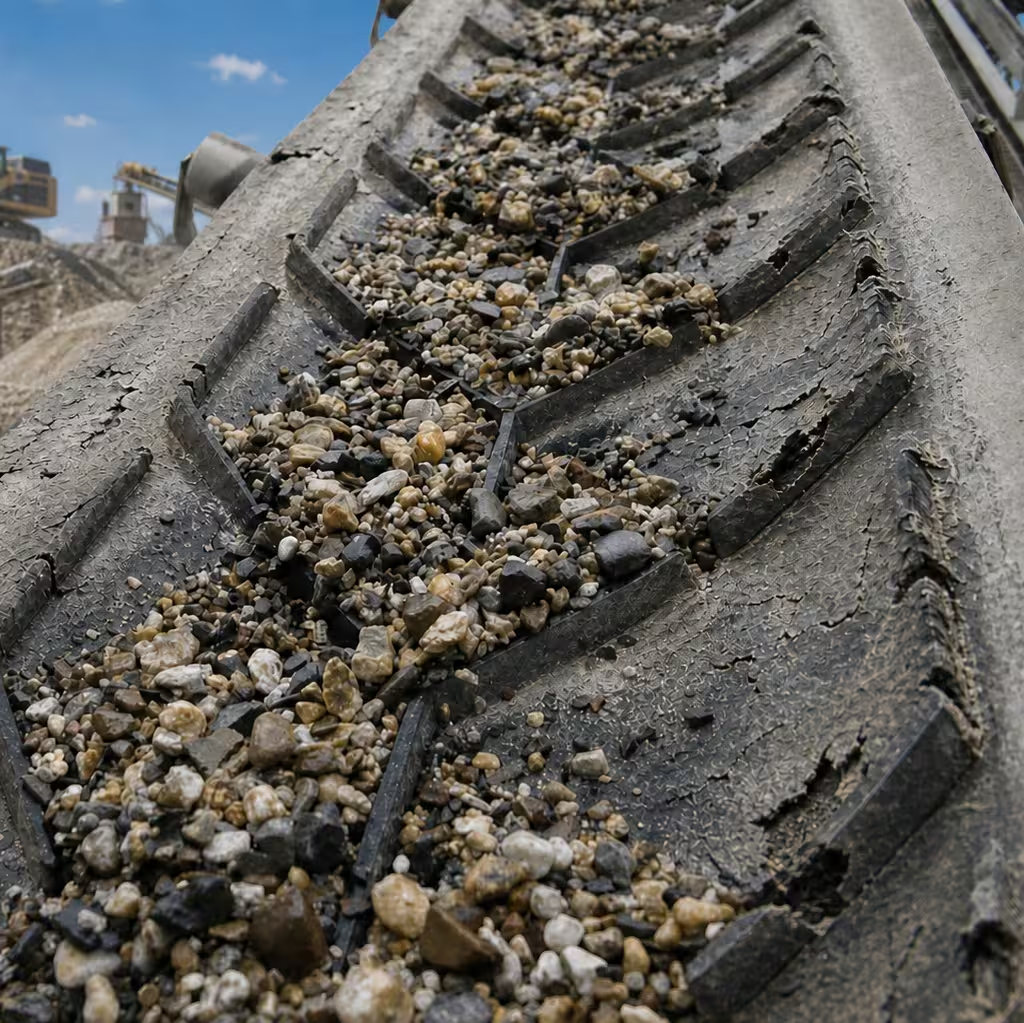
That gain in incline comes with two drawbacks. The cleats stand exposed on top of the carrying side and take every impact and every bit of abrasion first. A smooth cover spreads the wear across the whole surface; a profile concentrates it on the tips. Exact service life, that is how long a profile holds up before it has to be replaced, depends on the plant, so I will not put a number on it here. In the field, you see the cleat tips round off first. And once the tips are rounded, the grip drops long before the belt itself is worn out.
The second point is cleaning, and it tends to get underrated. A smooth belt runs over a head scraper that pulls the carrying side clean. On a profiled belt that does not work: the blade cannot follow the cleats, and the material lodges between the profiles. What is documented, at least, is that the open V has the edge here, because liquid can drain off and it is easier to clean, while the closed V carries more but also holds on to more. There are no hard figures for carryback, the material that stays stuck to the belt and travels back along the return run, or for the cleaning of profiled belts.
Because of the shape of its profiles, a chevron belt cannot be cleaned with ordinary scrapers. Specialised scraper systems do exist, however, with softer PU blades that are shaped like combs and give good results here. They do not match the cleaning performance you get on a smooth belt.
Where chevron ends and the sidewall belt begins
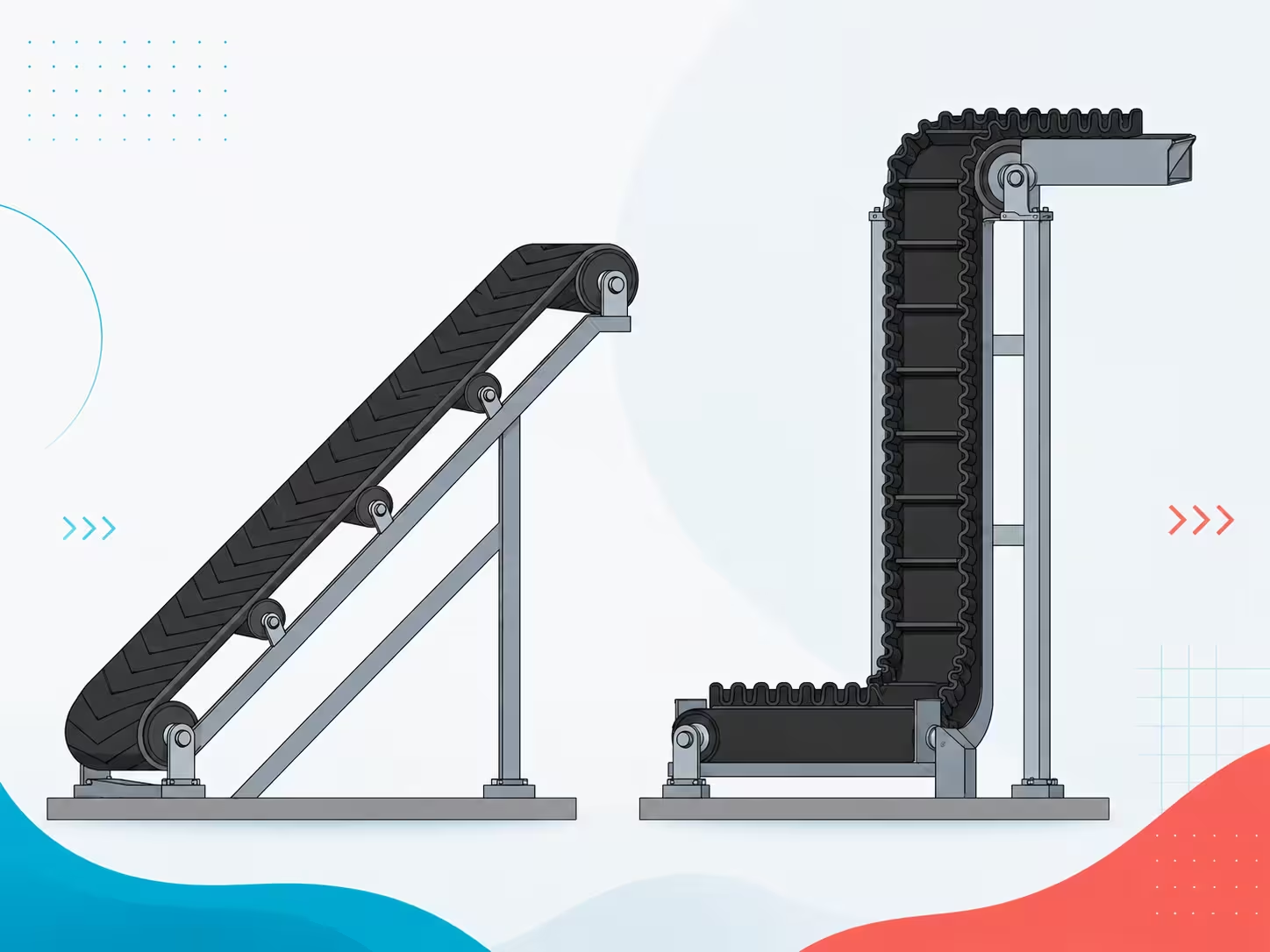
At some point the tallest profile is not enough. In practice the chevron belt runs out at around 40 degrees. Up to there you shift the limit with height and geometry, but you will not lift the material straight up with it. If you have to go steeper, up to 90 degrees and without anything falling out on the way, you are in the next segment.
That is where sidewall or steep-incline belts come in. They have a cross-stabilised base belt, corrugated sidewalls and cross-cleats that together form pockets in which the material is carried upwards. That is a system of its own with its own sizing, not a taller chevron. The dividing line is simple: up to around 40 degrees, think of a profile on a flat belt. Above that, think of a sidewall belt.
- A chevron belt carries cleats on the carrying side that hold the material on the slope, where a smooth belt already gives up at 15 to 20 degrees.
- The achievable angle sits between 15 and 35 degrees by manufacturer data, depending on material and profile height; as an absolute ceiling, manufacturers quote around 40 degrees.
- Selection runs through the triangle of material, profile height and angle. Common cleat heights are about 5 to 32 millimetres, up to around 50 for coarse cases.
- Geometry counts: the open V drains and cleans more easily, the closed V carries more and grips steeper, U and Y are for coarse and steep.
- Profiles wear at the tips and cannot be cleaned with a standard head scraper.
- Above around 40 degrees chevron ends. For anything steeper, up to 90 degrees without material loss, you need a sidewall belt.
Frequently asked questions
What incline angle can a chevron conveyor belt manage?
Roughly 15 to 40 degrees, depending on the material and the profile height. Manufacturer data runs from 15 to 20 degrees for grain up to 30 to 35 degrees for scrap, and as an absolute ceiling manufacturers quote around 40 degrees. A smooth belt, by contrast, usually gives up at 15 to 20 degrees. These are rough guides, not a guarantee for your plant.
Which profile height do I need for which material?
The coarser and stickier the material and the steeper the slope, the taller the profile. Manufacturer matrices put grain, for example, on a shallow open V of 6 to 15 millimetres, and ore on a closed V of 20 to 32 millimetres. Common cleat heights are about 5 to 32 millimetres, and for coarse materials and steeper angles there are profiles up to around 50 millimetres.
What is the difference between an open and a closed V-profile?
The open V runs open towards the sides. That lets liquid drain off and makes it easier to clean, but it is meant more for middling inclines. The closed V forms pockets, holds more material and gives more grip on steeper slopes. The drawback: it holds on to more as well and is harder to keep clean.
Can you clean a chevron belt with an ordinary scraper?
In practice, no. A standard head scraper pulls the smooth carrying side clean but cannot follow the cleats. The material lodges between the profiles and the blade never reaches it. Profiled belts therefore need a different cleaning approach, more likely brushes or purpose-built solutions. Hard figures for this are barely documented in public, so it stays a rule of thumb.
When is chevron not enough and I need a sidewall belt?
From around 40 degrees. Up to there you shift the limit with profile height and geometry. If you have to go steeper, up to 90 degrees without material loss, you need a sidewall or steep-incline belt with corrugated sidewalls and cross-cleats. That is a system of its own, not a taller chevron.
The Conveyor Belt Calculator lays out cross-section, motion resistances and drive power, free in the browser and without signing up.