Maintenance, Splices & Wear Protection
Wear Liners: Rubber, Ceramic or PU? What Lasts Where
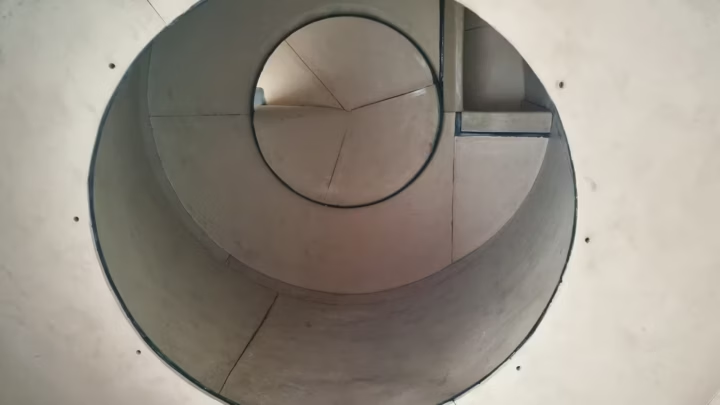
Rubber, ceramic or PU wear lining: there is no overall winner. Which material lasts longer is decided by the load case at that exact…
Conveyor belt know-how
Belt selection, components, damage diagnosis and maintenance — explained with substance, no sales talk.
Rubber, ceramic or PU wear lining: there is no overall winner. Which material lasts longer is decided by the load case at that exact…
A loud or seized conveyor idler is an early warning, not a cosmetic flaw. A bearing rarely fails all at once; it announces itself…
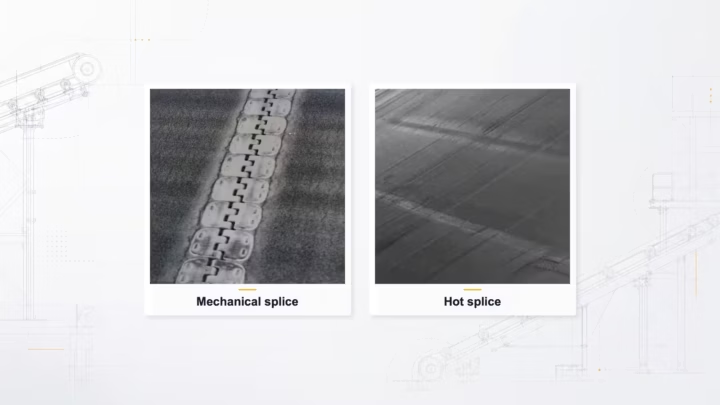
With a belt splice there is no blanket "better", only a "right for your plant". A mechanical splice is quick, cheap, ready to run…
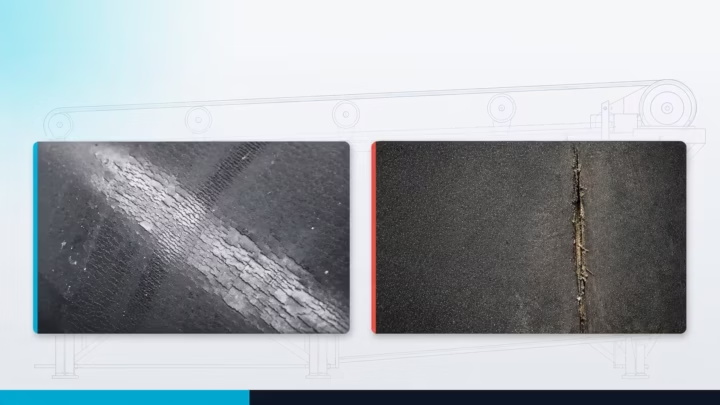
A longitudinal rip in a conveyor belt almost always starts the same way. A foreign object jams tight, works into the carcass and cuts…
Impact damage in a conveyor belt almost always starts at the loading point, where heavy or sharp-edged lumps drop onto the belt from a…
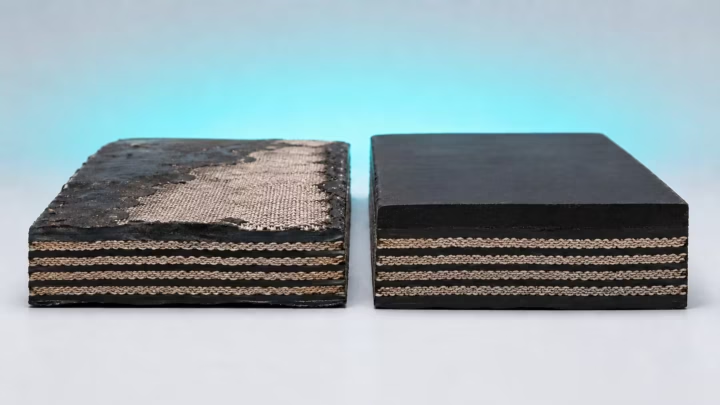
Conveyor belt cover wear almost always starts on top, on the carrying side, and its hot spot is the loading point. The cover is…
Conveyor belt cracks are a catch-all term for very different kinds of damage. Fine surface cracks usually come from ageing, ozone and UV. A…
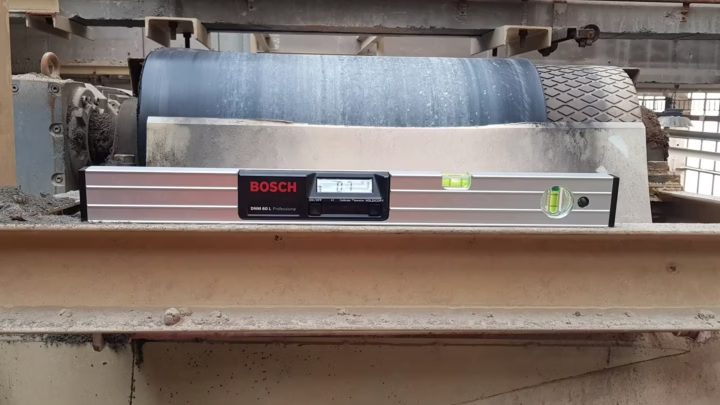
Conveyor belt mistracking is almost always a symptom. Tracking the belt back to centre does not start at the adjusting screw, it starts at…
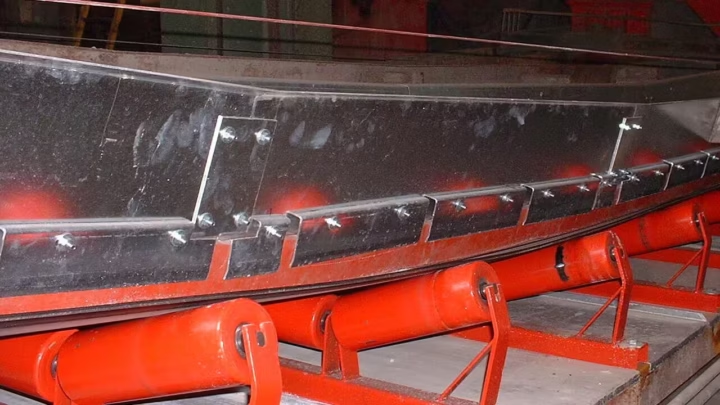
Conveyor belt skirting, the seal that runs along the belt edge at the transfer point, closes the gap between the chute wall and the…
At every conveyor belt pulley, friction, the grip between belt and pulley, decides everything. The drive pulley transmits the motor's power to the belt…
A conveyor belt cleaner has one main job: to stop carryback, the material that stays stuck to the belt after the discharge point and…
A corrugated sidewall conveyor belt still carries bulk material where a smooth belt would have given up long ago. Corrugated sidewalls along the edges…
A chevron conveyor belt carries cleats vulcanised onto the carrying side, and those cleats hold the material on the slope where a smooth belt…
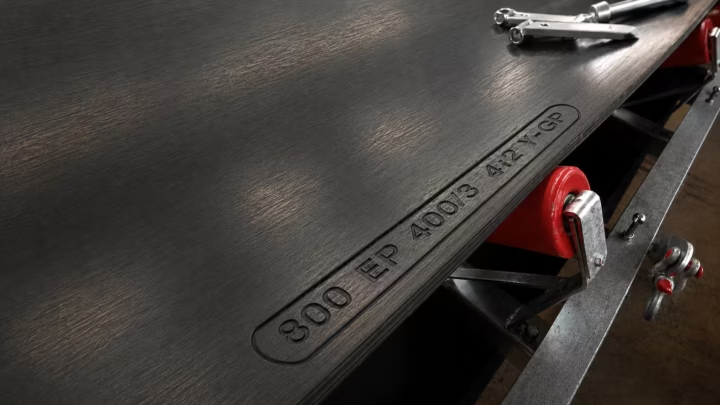
The cover of a conveyor belt is the wear layer over the carcass, and the marks in the designation tell you how much it…
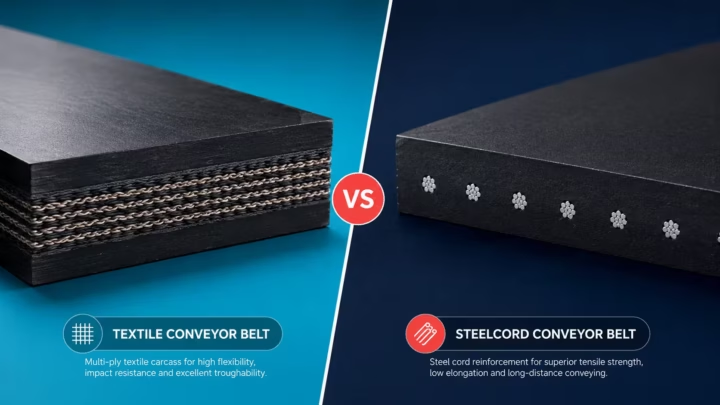
An EP conveyor belt carries the load through textile fabric plies, a steel cord conveyor belt through steel cords vulcanised in along its length.…
Buying a replacement conveyor belt is about more than the price per metre. The three questions that actually save money are these: cut-to-length or…
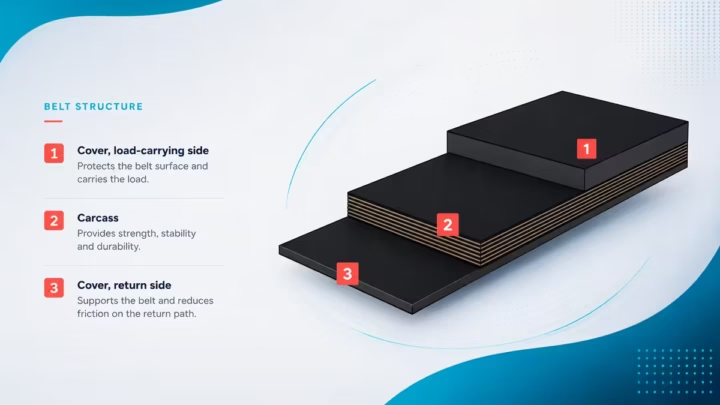
A rubber conveyor belt is a carcass that takes the tension, the load-bearing core of fabric plies or steel cords, and rubber covers that…
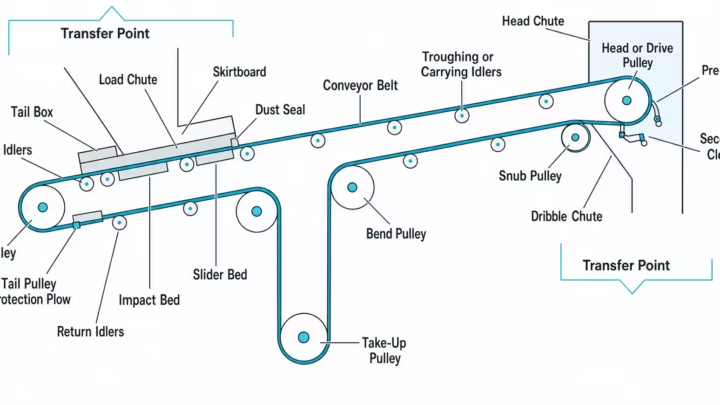
The build of a conveyor belt is quickly summed up. It is made up of the belt, the drive and tail pulley, the idlers,…
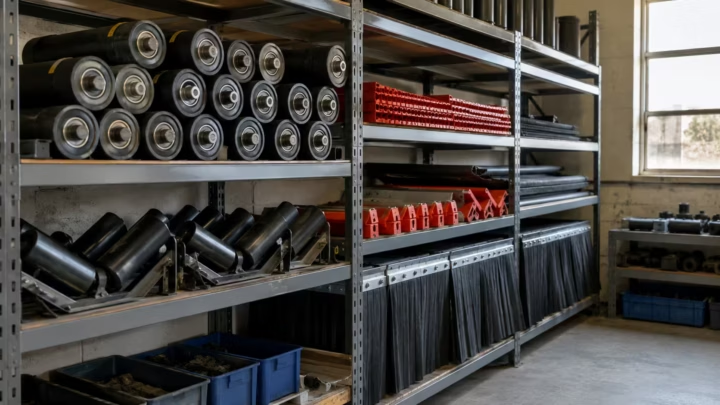
Conveyor belt spare parts wear out in a fairly reliable order. The small, cheap parts give way first: idlers, scraper blades, skirt seals. The…
Conveyor belt scrapers remove carryback, the material that stays stuck to the belt after the discharge point. The primary scraper at the head pulley,…
Nothing found.
These topics might fit: