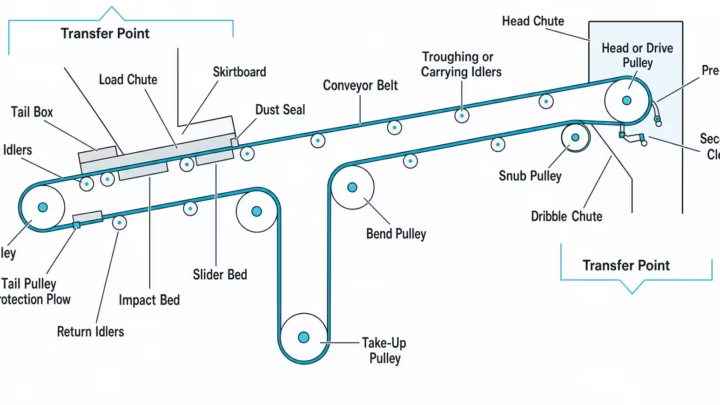
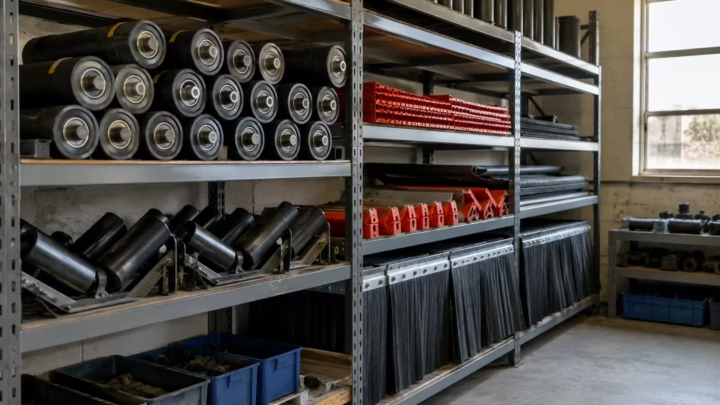
At a transfer point in a gravel plant, the same ridge lay under the belt every morning. Fine material, trickled out at the side, heaped overnight into a small bank. Two men stood in front of it with shovels every day before the plant started up, and at some point, one of them told me, nobody asked where the stuff actually came from any more.
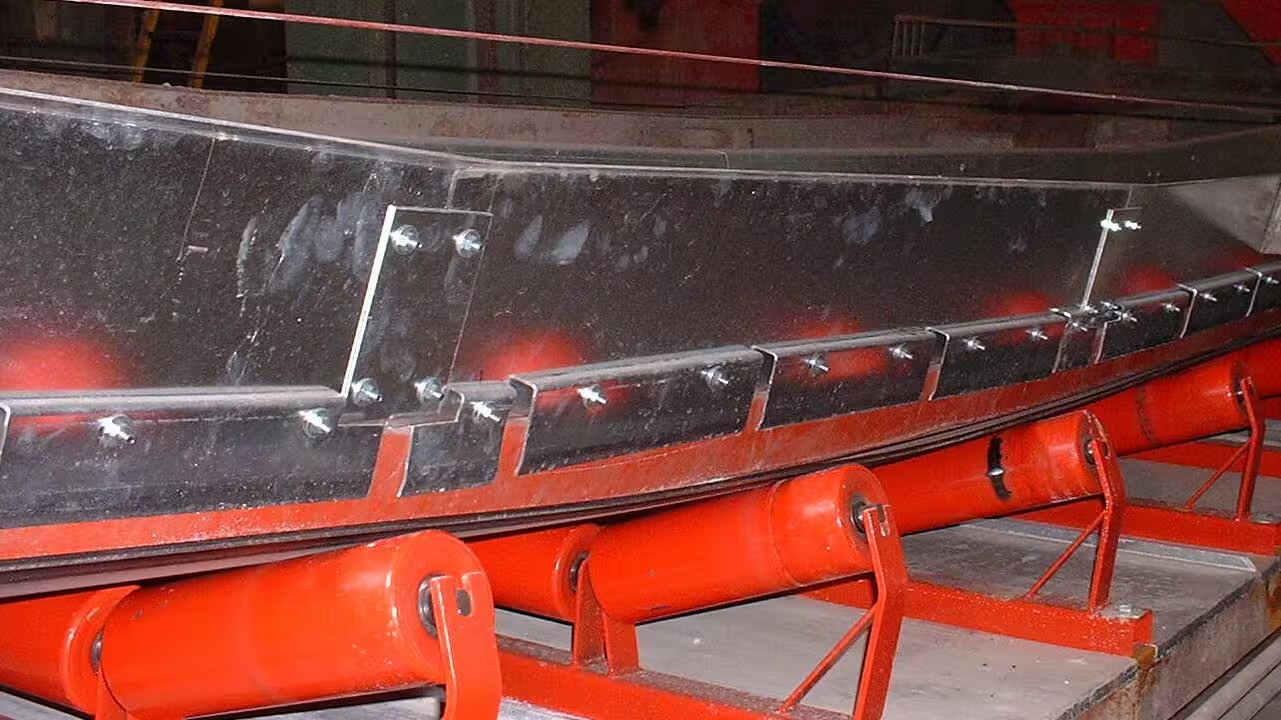
The ridge under the belt
The ridge came back every morning, and for a long time nobody looked for the reason. The shovel was right there, and clearing it was as much a part of the start-up as putting the coffee on. Only when somebody asked why this one transfer point, of all of them, spilled so much fine material beside the belt every day did anyone look closer.
The answer sat at the side. The skirt seals had worn through and stood skewed. Through the open gap between rubber and belt, a little trickled out with every load. On its own it was barely noticeable, but by the next morning it had built back up into a bank. A few new sealing rubbers, a clean adjustment, and the daily shovelling stopped.
That is the whole story of the skirting in one sentence. An inconspicuous part that buys you peace for a few euros when it is new, and eats material and working time every day once it is worn. It never sits high on any spare-parts list, and yet the daily clean-up work hangs on it.

What conveyor belt skirting really does at the transfer point
The moment the material lands on the belt is wilder than it looks from outside. The material drops out of the chute, the shaft that guides it from above onto the belt, slams down, and the fines fly off in every direction. At the same time the moving belt pushes air ahead of it, turbulent pressure builds under the chute, and that air looks for any gap it can escape through. Usually that is the side, the gap between the chute wall and the belt.
That gap is exactly what the seal at the transfer point closes. The skirting keeps the bouncing material on the belt and keeps the dust and the pressure inside the chute, instead of letting both blow out at the side. It works like the rubber seal on a car door. As long as it lies soft against the frame, things stay quiet inside. Let it go hard or split, and a draught comes through every gap, and you feel it at exactly the spot where the seal has given way.
It only sounds like a minor detail until you stand next to it. At the transfer point this piece of rubber decides whether everything stays on the belt or half the surroundings end up covered in dust. Skirting is the basic seal of the loading point.
What the skirt seal is made of, and how it seals
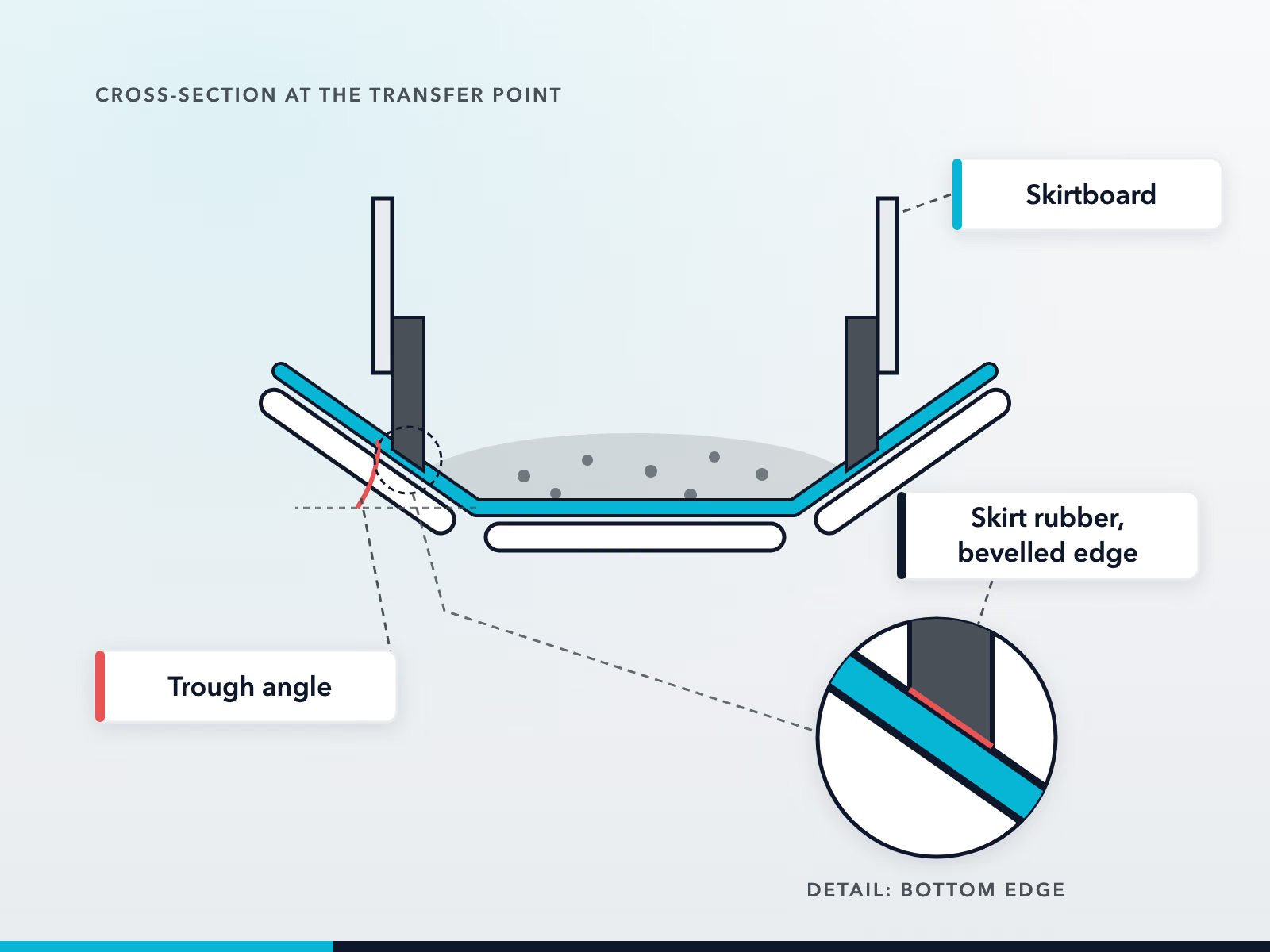
The skirting is made up of two parts: the fixed wall on the transfer housing and the skirt seal that closes the gap down to the belt. This skirt seal, also called the sealing rubber, is usually natural rubber (NR) or SBR. For special cases there are special compounds, for instance in underground mining or in food applications, where particular demands on fire behaviour or material compatibility apply. In the normal case, though, it is simply a tough rubber strip that runs the whole length of the transfer housing and follows the belt along its side.
One detail gets overlooked easily, and it decides how well the seal works. At the transfer point the belt does not lie flat, it sits in the trough. The trough idlers pull it up into a shallow tray so the material does not roll off at the sides. The skirt seal has to follow that shape. It does that on its own: the seal is made longer than the gap it has to close, and because the rubber is soft, it bends inwards on contact with the belt and settles into the trough.
If the seal does not reach far enough down to the belt, it is brand new and still leaks. It then touches the belt only at the edge, gapes open beside it, and the fines take exactly that route. The right seal set too short is as good as no seal at all.
From leak to belt damage: the pinch point
So far a leaking skirt sounds like a nuisance, not real damage. That changes the moment the sealing edge loses its seat completely. Then the leak becomes a trap, what the trade calls a pinch point, and from there on the skirting harms the very thing it is there to protect.
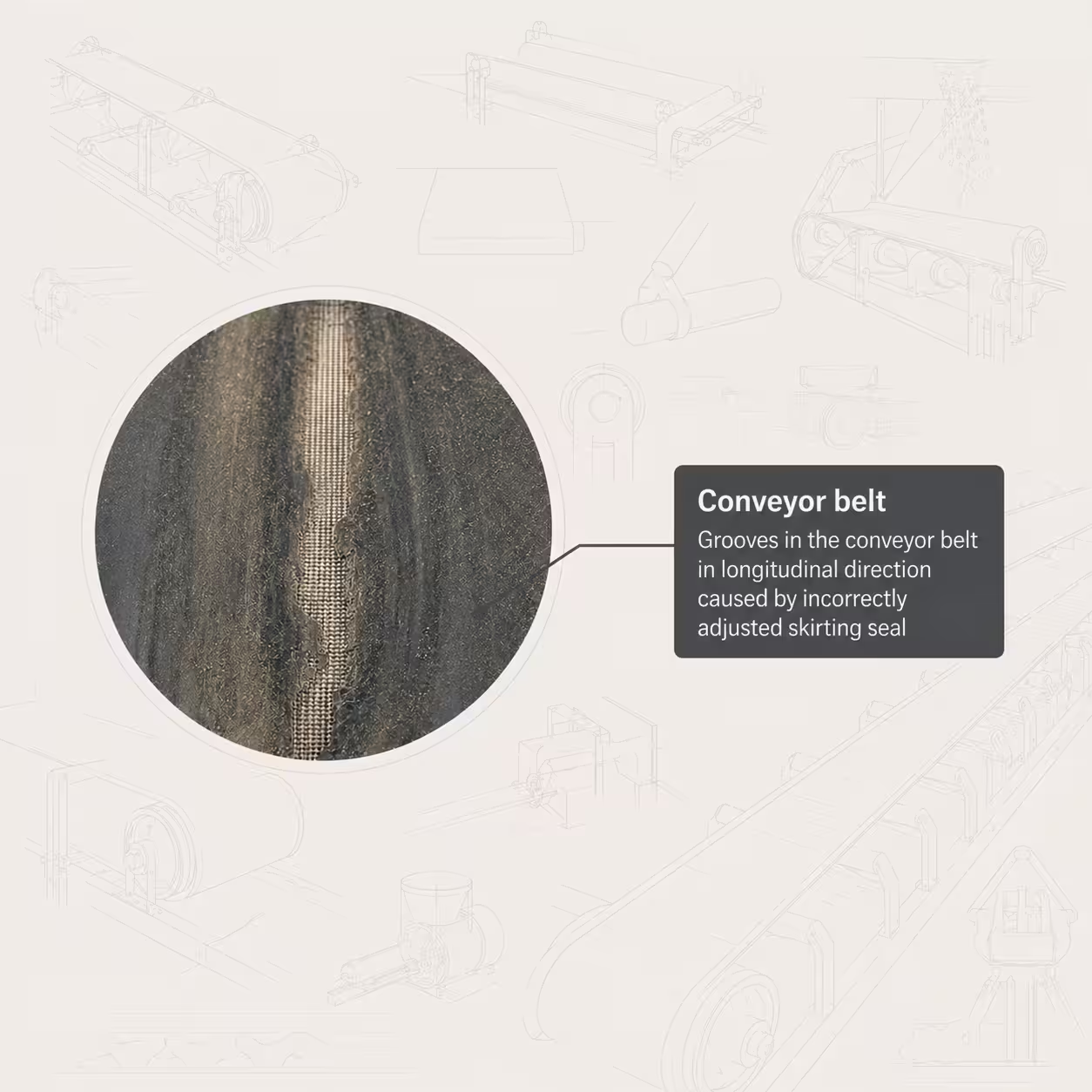
Here is how it goes. With the seal standing loose and skewed, fines slip between the rubber and the belt and wedge in there. A grain that should have carried on is suddenly stuck between the loose seal and the belt. On every revolution the belt drags past that grain. The trapped material then acts like a file clamped in place: the belt runs past the same edge metre after metre, and the file takes material off. What starts as a thin scratch becomes a groove, and the groove runs the full length of the belt, because every point on the belt comes past that spot sooner or later.
That is why a worn skirt is not just a symptom but becomes a cause in its own right. The belt forgives a lot. But a file held fast against it is the one thing it does not forgive. The table below shows how to spot it before it gets that far.
| What you see | What lies behind it | What to do |
|---|---|---|
| Material escaping and a ridge under the side of the belt | The skirt seal no longer sits across the whole width | Adjust the seal, then watch the plant on a test run |
| A dust plume at the transfer point although the chute looks tight | The pressure from the chute escapes through the side gap | Check the seal along its full length and close it up |
| A loose, split or skewed rubber strip | Wear or wrong adjustment, a pinch point is coming | Replace the sealing rubber before material wedges in |
| Longitudinal grooves or a ribbed track in the belt | Trapped material has already scoured the belt | Remove the cause at once, then assess the belt damage |
The daily bill: material, dust, clean-up time
Let us add it up for the transfer point we started with, without inventing a single euro. Every day a ridge lands beside the belt. That is, first, lost material you have paid for but never delivered. It is, second, clean-up time, two men with shovels every morning before the plant even runs. And it is, third, dust that spreads through the building, onto bearings, control cabinets and into the air the people there breathe.
Some of the escaped material also stays stuck to the belt and rides along on the return run, where it settles on idlers and pulleys. How much stays behind in the end can even be put in grams per square metre, but cleaning the belt and dealing with carryback are a chapter of their own. For the skirting, this connection is enough: lost material, clean-up time and dust all arrive together as soon as the seal leaks.
Against that stands the effort of prevention. Adjusting a skirt seal is a few minutes with a spanner. A new set of sealing rubber costs a modest amount and is fitted in one morning. Leave that undone and the material loss runs on, day after day, until the scoured belt eventually comes on top of it. The sealing rubber is a cheap wear part and easy to plan for; the belt damage is expensive and comes unplanned.
Adjust, do not replace
The good news with skirting is that the maintenance is rarely a big job. In most cases you do not replace the whole assembly, you only renew or adjust the part that wears: the skirt seal itself. The frame, the bracket, the transfer housing all stay put.
You do better still if the seal never wears right through in the first place. A skirt seal creeps down slowly as it wears, the contact pressure drops, the gap opens up. Regular adjustment catches that before material gets through. It is the oil change of the transfer point: a small, plannable job that spares you a big, unplanned one.
Fixed calendar dates do little here. A skirt seal wears by material, volume and moisture, not by date. Add it to the normal walk-round, glance at the side of the transfer point, and you will see the gap starting long before the ridge is back. The plant will show you how often your seals need adjusting.
How skirting works with the rest of the transfer point
The skirting does not stand alone at the transfer point. At the loading point the material drops through the chute onto the belt, and several stresses come together right here: the impact energy of the material, the dust, the spillage. An impact bed or a row of impact idlers takes the impact so the belt is not punched through over and over at that one spot. Alongside it, the skirting holds all the churned-up material together. Both work on the same metre of belt, each with a different job.
That is why it pays to think of the transfer point as a whole instead of a collection of separate parts. If the impact bed wears down, the material lands harder, bounces further, and the skirting takes more of it. If the loading point sits off-centre, the material lands off to one side, presses against the seal on one side and wears it through unevenly. A symptom at the seal sometimes has its cause half a metre away.
Where the skirting ends and other topics begin is left open here on purpose. The full overview of every part of the transfer point belongs in an article of its own. How sharp material punches through the belt when the impact bed fails is a separate topic too. And the pulley lagging that gives the grip a few metres further on is a job in its own right anyway. For the seal at the transfer point, one plain sentence holds: fix the cause first, then the symptom, and the skirt seal is the symptom more often than you would think.
- Conveyor belt skirting seals the gap between the chute wall and the belt at the transfer point and holds material and dust back.
- The skirt seal is usually natural rubber (NR) or SBR and is made longer than the gap, so that it bends inwards at the belt and sits against it across the whole width.
- Once the seal loses its seat, a pinch point forms: trapped material scours or ribs the belt along its whole length. A leaking skirt turns into belt damage in its own right.
- Leaking skirting costs in three places at once: lost material, dust in the building, daily clean-up time. Adjusting it is cheaper than the damage that follows.
- Usually only the skirt seal is renewed or adjusted, not the whole assembly. You check it by condition on the walk-round, not by the calendar.
- Think of the transfer point as a whole: feed, impact bed and skirting are linked, and an off-centre feed wears the seal through unevenly too.
Frequently asked questions
What is skirting on a conveyor belt?
Conveyor belt skirting, also called skirtboard sealing, is the seal at the transfer point. It closes the gap between the chute wall and the belt with a rubber strip and so keeps the bouncing material on the belt and the dust in the chute. Without that seal, material escapes at the side of the loading point.
How do I tell that the skirt seal is worn?
Most clearly by escaping material: if a ridge of fines builds up under the side of the belt or a dust plume trails from the transfer point, the skirt seal no longer sits cleanly. Check as well whether the rubber is loose, split or standing skewed. Longitudinal grooves in the belt are the late sign that material has already wedged in.
Why can loose skirting damage the belt?
When the sealing edge loses its seat, fines slip between the seal and the belt and wedge in. That trapped grain acts like a file clamped in place, which the belt drags past on every revolution. This is how a pinch point forms, one that scours or ribs the belt along its whole length. The worn skirt itself becomes the cause of the damage.
Do I have to replace the whole assembly, or is adjusting enough?
As a rule the smaller job is enough. Usually only the skirt seal is renewed or adjusted while the frame and housing stay in place. Regular adjustment holds the contact pressure before a gap opens, and it is the cheapest prevention against knock-on damage to the belt. You replace the whole assembly only when the bracket itself is damaged.
What is a skirting seal made of?
Usually natural rubber (NR) or SBR, a tough strip that runs the whole length of the transfer housing. For special cases such as underground mining or food applications there are special compounds. Besides the material, the sizing matters: the seal is made longer than the gap it has to close and bends inwards at the belt, so it rests evenly across the whole width.
The Conveyor Belt Calculator works out both and adds resistances and drive power, free in the browser and without signing up.